Why Is My Terrarium Moss Turning Brown and How to Fix It
Why is my terrarium moss turning brown? Match the pattern, then fix moisture, light, heat, or rot before you pull the moss.
Most advice tells you to mist brown moss harder. Don't start there. If you're asking why is my terrarium moss turning brown, water is only one possible answer, and adding more can turn a light-burned or waterlogged patch worse within days. Look first, touch second, and change one thing at a time. Brown tells you where stress hit and how the tissue responded. Read that pattern correctly and you'll often save moss that looks finished.
Brown Moss Is a Signal Not a Sentence
Two jars sit on one shelf with the same cushion moss. The jar near the afternoon window turns bronze against the glass. The shaded jar stays green. They received similar misting, so thirst alone doesn't explain the difference.
That contrast is the lesson. Browning is a stress color, not proof the moss is dead. Moss doesn't have the waxy skin or internal plumbing of a houseplant. Water in its shoots rises and falls with the air and substrate around it, so heat, light, drying, and stagnant wetness can each leave a different brown.
Before you mist, move, or trim anything, write down three observations.
- Location: Is brown at the tips, the base, the center, or only the window side?
- Texture: Does it feel crisp and curled, or soft, slimy, and collapsed?
- Glass: Is condensation present, absent, or heavy all day?
Those three notes matter more than how brown it looks from across the room.
A crisp patch near a vent needs different help from a mushy patch under fogged glass. Match the pattern first. Then test whether tissue can recover before you remove it.
Match the Brown Pattern to the First Fix
Read the chart from the top and stop at the first row that matches both location and feel. Don't stack every fix in one day. If you mist more, move the jar, open the lid, and trim at once, you won't know what helped.
| Pattern | What you see and feel | Likely cause | First action |
|---|---|---|---|
| Repeated drying | Brown tips or patches, dry and brittle, often near a vent or open lid | Shoots dropped below the water range needed for photosynthesis | Mist gradually with clean water, close the lid, and cut drafts |
| Opened too often | Even fading after the jar is opened daily | Tissue water tracking room humidity rather than a closed moist air mass | Stop frequent opening and restore moderate enclosure humidity |
| Window burn | Bleached or crisp brown on the glass facing the sun | Direct light and a hotter glass microclimate | Move to bright indirect light and keep moss from drying in sun |
| Wet plus bright | Brown while condensation is still on the glass | Hydrated tissue under intense light, not a dry jar | Reduce midday sun without adding more water |
| Waterlogged base | Dark, mushy lower layers, sometimes sour | Prolonged saturation and poor oxygen | Increase ventilation and stop keeping the substrate soaked |
| Dormant cushion | Curled brown that becomes pliable in high humidity | Poikilohydric shutdown, not decay | Run the recovery test and wait for new green growth |
| Dead tissue | Black, slimy, or foul, still brittle after gentle rehydration | Decay or severe injury to the photosynthetic tissue | Remove only the dead portions and correct the condition that caused them |
Why a Fogged Jar Can Still Brown
The wet plus bright row confuses people most. Condensation shows water vapor met glass. It doesn't show that light is safe.
A Journal of Experimental Botany study on light and hydration reports that hydrated thalli were substantially more sensitive to high light than desiccated thalli, and combined irradiance and water stress sometimes prevented recovery after rehydration. That's why moss can brown beside a bright window while the glass stays fogged. Treating that patch as thirsty adds water to the very condition that's hurting it.
Use timing and placement as clues. Browning on the glass-facing surface points toward light or heat. Uniform fading after frequent opening points toward drying. Mushy lower layers point toward prolonged saturation and poor ventilation.
Practical rule: Change only the first action from your matching row, then wait several days before judging it.
Species don't all respond the same way, so a universal misting calendar can't replace observation. For day-to-day habits that keep moisture steadier, see how to keep moss alive indoors and apply them after you've identified the pattern in front of you.
Run a Recovery Test Before You Remove Moss
Don't pull a brown cushion on the day you notice it. Moss is poikilohydric. It can pause normal photosynthesis while dry and resume activity after rehydration, so curled brown tissue isn't automatically dead. That pause works like hibernation: still on the outside, alive underneath. Wait for a result before you reach for the scissors.
The test below separates dormant tissue from decay.
- Move out of direct sun: Put the container in bright indirect light.
- Mist lightly: Use clean or distilled water until the surface is damp, not flooded.
- Restore moderate humidity: Replace the lid, but don't seal a soggy substrate.
- Check after several hours: Viable curled tissue should feel more pliable.
- Watch for days to weeks: Look for new green growth, because old brown cells rarely turn green overnight.
- Remove selectively: Take out only portions that stay black, slimy, foul-smelling, or brittle.
This illustration shows the gentle approach, dampening the cushion rather than soaking the whole jar.
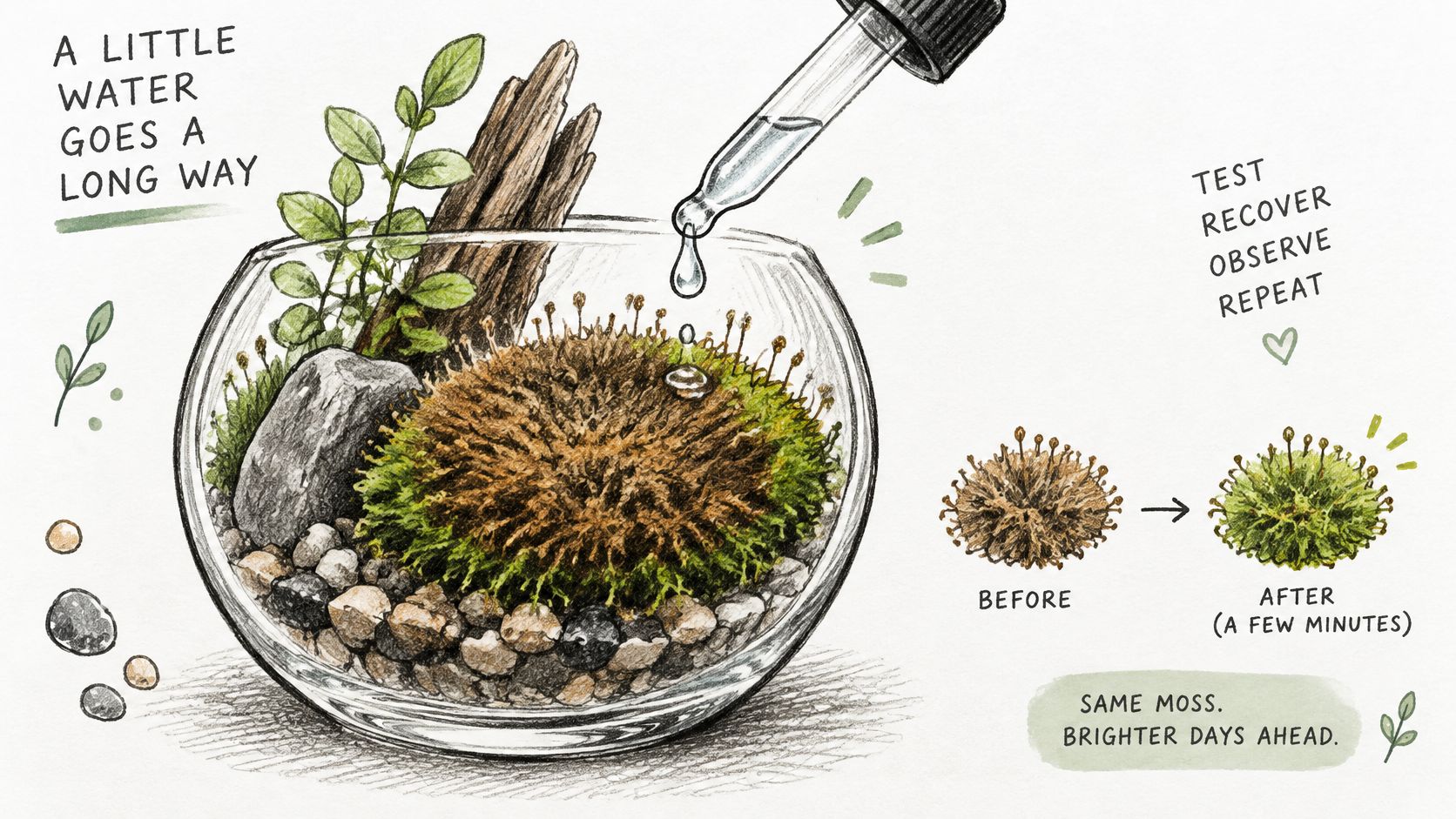
Moss can stay photosynthetically stable well into partial drying, so a patch that looks badly stressed may still hold living tissue under the browned surface. That tolerance is exactly why steps four and five matter.
Constant wetness won't produce a faster or clearer answer. Waterlogged substrate invites mildew and rot, especially at the base of the cushion, and a base that rots during the test tells you nothing about what browned the moss in the first place. Aim for light dampness and airflow.
Pair the result with your matching row, then judge by texture and new growth rather than color alone.
Dehydration Thresholds and Heat Risk
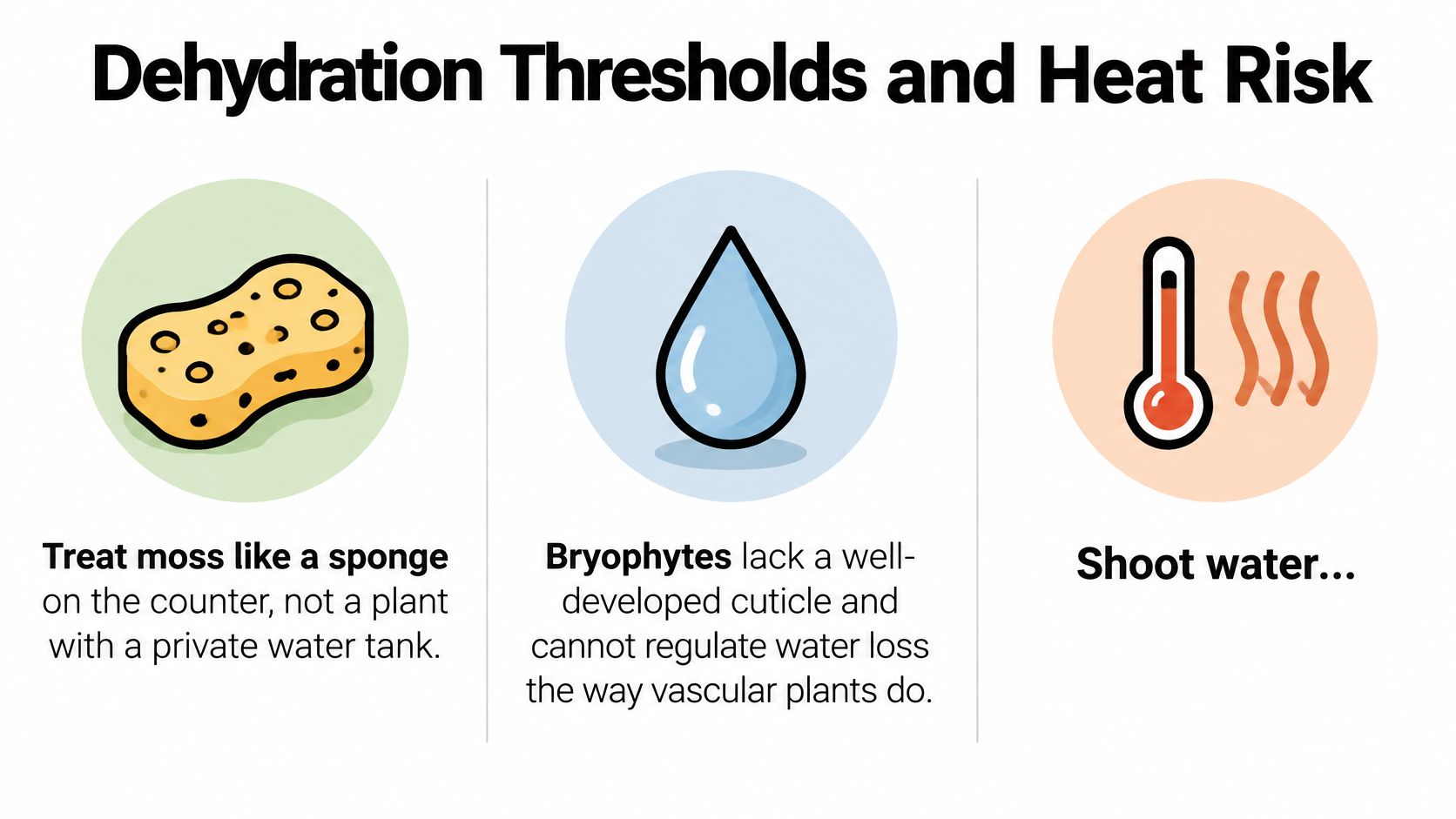
Moss works like a sponge sitting on a counter. It takes up water when conditions are damp and loses it as soon as the surrounding air dries, because it has no internal reservoir and no skin thick enough to hold moisture in.
A Journal of Experimental Botany review of bryophyte water relations reports that at 20°C, moss equilibrated at 80% relative humidity can reach a water potential near −30 MPa, and some species begin desiccating at around 86% relative humidity. In plain terms, air that feels comfortable to you can already be pulling moisture from exposed tips, especially beside a lid gap or a vent.
A jar can be drying before it looks dry.
This graphic sums up why exposed moss changes so quickly.
Where Photosynthesis Starts to Fail
Controlled drying trials show the same water loss ending two different ways, and temperature decides which. Match your brown patch to the condition, then decide how worried to be.
| Trial condition | Result | What it means for your jar |
|---|---|---|
| Dried for a day at moderate temperature | Little lasting photodamage, most measures recover | Ordinary drying often greens back |
| Dried under high heat | Drastic injury to photosystem II, with oxidative damage accumulating in the tissue | Brown may persist after rewetting |
| Efficiency measured at half its peak | Tissue still holds a small share of its full water content | Moss can be near failure before it looks fully dry |
A 2018 study examining 12 moss species found that water-holding capacity, water-retention capacity, and the optimal water-content range for photosynthesis were positively related. Species that lose moisture quickly generally have a narrower safe range. That's another reason one schedule doesn't suit every cushion, and why choosing the best moss for a closed terrarium matters before you plant.
Heat Changes Whether Brown Recovers
Temperature decides whether rewetting helps. In dehydration trials, a day of drying at moderate temperature left little permanent photodamage, while the same drying under high heat caused drastic injury to photosystem II. Dry moss in a cool spot may recover. Dry moss baked in a warm, bright jar can stay brown because the photosynthetic machinery itself is injured.
Work in this order.
- Check position: Brown near a vent or an open lid points to repeated drying; brown concentrated on the brightest side of the cushion points to heat.
- Feel the glass: A jar that turns warm to the touch in the afternoon is losing the same water faster and hitting the tissue harder.
- Rewet without flooding: Keep the substrate moist, never permanently saturated or oxygen-poor.
- Steady the cycle: Moderate moisture and temperature protect moss better than occasional flooding.
Bright Windows and Wet Moss Together
A jar on a bright sill never dries evenly. The side facing the glass heats first, loses water first, and often browns first, while the shaded side stays green and springy. The cushion works like a two-sided test strip: its window face records whatever the light, heat, and moving air did to it.
This diagram connects the window, heat, and water loss that act at the same time.
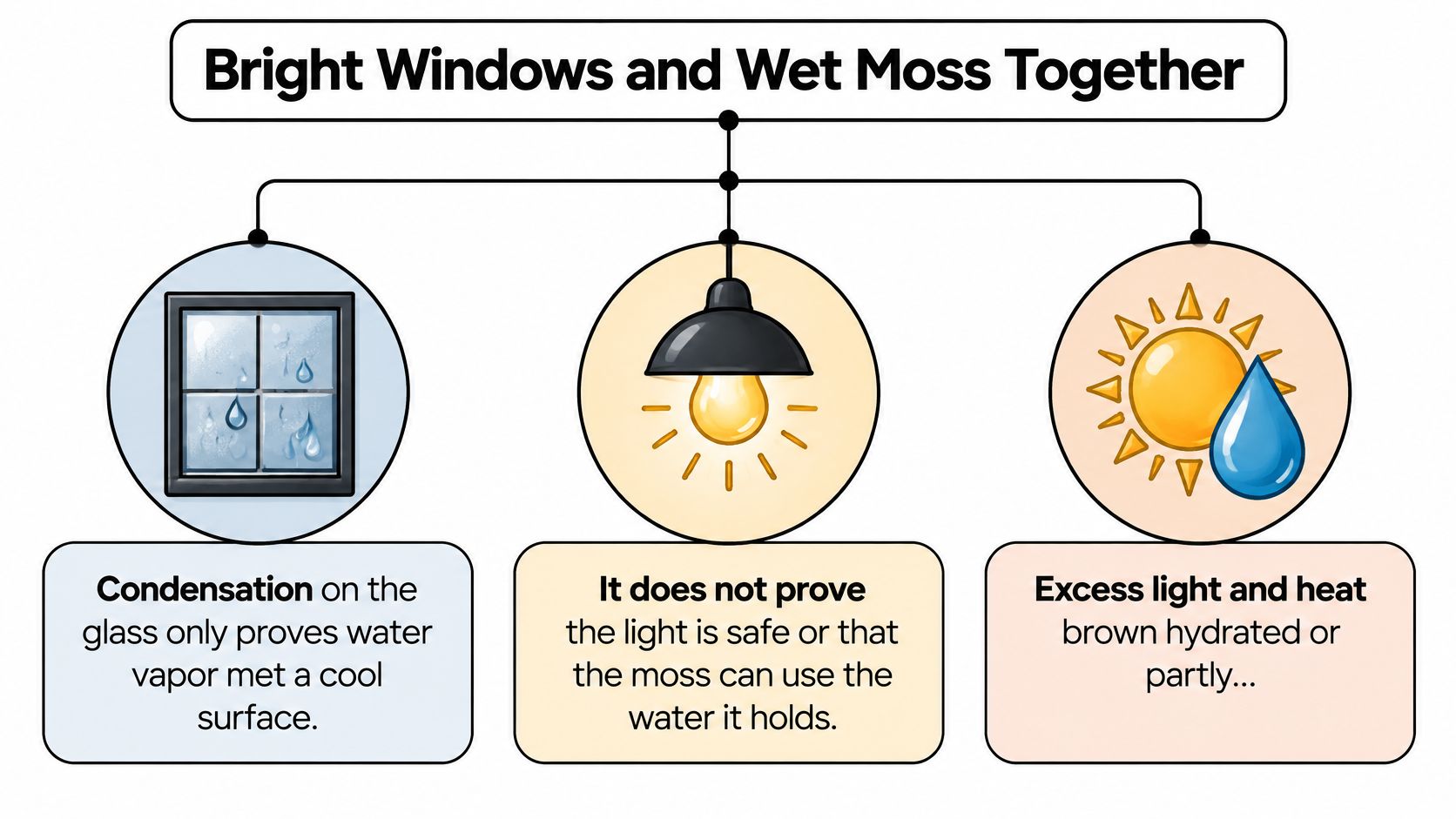
An Annals of Botany study of three Antarctic moss species reported that high light accelerated the decline of photosynthetic efficiency during desiccation and increased damage to photosystem II. The two stresses multiply each other: moss copes with brightness while it is plump, yet the same brightness injures it once drying starts. Direct sun through glass also builds a hotter microclimate than the room, increasing evaporation from moss and substrate together.
Light can injure tissue without an obvious scorch mark. In alpine mosses, photosystem II efficiency declined steadily as ultraviolet radiation increased. A midday windowsill delivers strong visible light, ultraviolet radiation, and a rapid temperature swing in one place, so a cushion that looked safely moist at breakfast can be under combined stress by noon.
Watch this short demonstration before you move your jar, then compare the window side of your moss with the shaded side. One face brown and the other green is a directional pattern, not a humidity verdict.
Brown, bleached, or crisp patches facing the window fit this pattern. Move the terrarium to bright indirect light, cut direct afternoon sun, and don't let moss dry while it is still exposed to strong light. If the glass feels warm at midday, distance matters more than another misting.
Tell Natural Dieback From Real Damage
Some brown is ordinary aging. In a dense cushion, older shoots in the lower interior can die back as growth continues outward. You'll see a brown core or base while the outer edge stays fresh and green.
Check the cushion this way.
- Inspect the edge: Look for new green shoots around the outside.
- Lift gently: Check whether tissue beneath a brown patch feels firm.
- Judge spread: Brown confined to the older center suggests turnover.
- Trim sparingly: Remove only wet, smelly clumps or sheets that detach easily.
Healthy green growth at the edge is a strong sign you don't need to rebuild the jar.
If brown spreads from the window face or appears across every cushion at once, treat it as environmental stress instead. Leave a thin brown layer in place when surrounding moss is healthy. It can break down slowly while the cushion regrows, and your current light and humidity may already be suitable.
Reset the Jar So the Green Holds
After you've matched a row and finished the recovery wait, set the jar so the same stress doesn't return. Keep moisture even rather than cycling between a dry cushion and a soaked base. Keep the terrarium in bright indirect light, away from midday sun and hot glass.
Use the glass and the tissue together. If glass stays clear and tips feel crisp, open the jar less often. If the base smells sour or mildew appears, give it more air and stop saturating the substrate.
Check once a day for a week.
- Window face: Is new browning still appearing there?
- Tips: Do they feel pliable instead of brittle?
- Growth: Are fresh green points emerging?
Don't add a second fix until the first has had several days. Keep tissue that softens and greens. Remove only what stays black or foul. Hold light and moisture in the middle, and the green you save has a much better chance of staying.
If your next jar needs moss matched to its humidity, light, and airflow from the start, Moss Keeping offers practical species and terrarium building guides for home growers. Visit before you replant, compare what your shelf provides, and choose moss that can thrive there without constant rescue.